
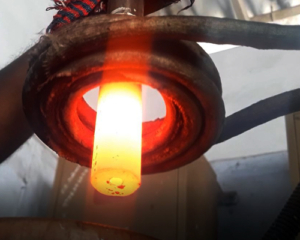
Induction Heating Machine Services
Induction heating machine services encompass a full lifecycle of technical support, from custom engineering to rigorous preventive maintenance, ensuring that high-speed industrial lines remain both efficient and precise.
- Custom Coil Design: Expert design of inductors (C-shaped, pancake, or conical) tailored to specific part geometries to ensure uniform heat distribution and minimal energy waste.
- Process Simulation & Prototyping: Utilizing 3D CAD (e.g., SolidWorks) and physical testing to develop a “recipe”—the perfect combination of frequency, power, and time—for each unique application.
- System Integration: Engineering standalone machines or fully automated robotic cells that integrate seamlessly into existing production lines for high-volume manufacturing.
Maintenance & Repair Services
Regular servicing is critical for maintaining the 90%+ energy efficiency typical of these systems.
- Preventive Maintenance (PM):
- Power Supply: Monthly inspections for water leaks, overheating copper bus connections, and deteriorating electrical insulation.
- Cooling Systems: Flushing closed-loop water systems, cleaning heat exchangers to remove calcium deposits, and checking pump lubrication.
- Coil Care: Daily cleaning of coil surfaces to prevent carbon scale buildup and ground leak faults.
- Calibration & Safety Testing: Yearly verification of door interlocks, ground leak detectors, and temperature sensor accuracy to comply with safety standards.
- Rapid Repair & Support: On-site troubleshooting and component-level repairs for IGBTs, capacitors, and transformers to minimize unplanned downtime.
Core Benefits of Professional Servicing
- Increased Uptime: Proactive PM programs catch small issues (like brittle hoses or loose ribbon connectors) before they cause catastrophic failure.
- Quality Traceability: Digital-iQ software and real-time diagnostics allow for the tracking and logging of every heat cycle to ensure consistent part quality.
- Extended Equipment Life: Well-maintained systems can operate for 10–15 years, significantly longer than those in poorly managed environments.